From Transient Vistas to The Gloaming: Why These Three Photographs
Three photographs from a larger body of work became a collection of their own. The Gloaming is about that moment when landscape, light and memory hover between one state and another.
From a larger body of work
I made Transient Vistas in Harris and Lewis in the Outer Hebrides in 2023. The series grew from long days moving through a landscape that never seemed entirely still. Weather travelled quickly, light altered familiar forms, and distance could appear or disappear within minutes.
Using intentional camera movement, I was not trying to describe the islands precisely. I was interested in something less fixed: the sensation of being there, the emotional pull of the land and the way a place can remain vivid in memory while becoming increasingly difficult to hold.
When a large body of work is shaped for an exhibition, every photograph has to serve the sequence. Some images carry the narrative forward; others interrupt it. A few refuse to behave altogether. Photographs are not always especially cooperative about the roles we assign them. If only they were so obliging.
Quiet Flame, Gloaming Hills and Eclipsed Horizons were not included in my gallery exhibitions, but I continued to return to them. Away from the larger series, they began to feel less like photographs left behind and more like the beginning of a separate conversation.
Why these three photographs
The word “gloaming” describes the fading light between day and night. It is a particularly Scottish sort of word: atmospheric, slightly mysterious and difficult to hurry.
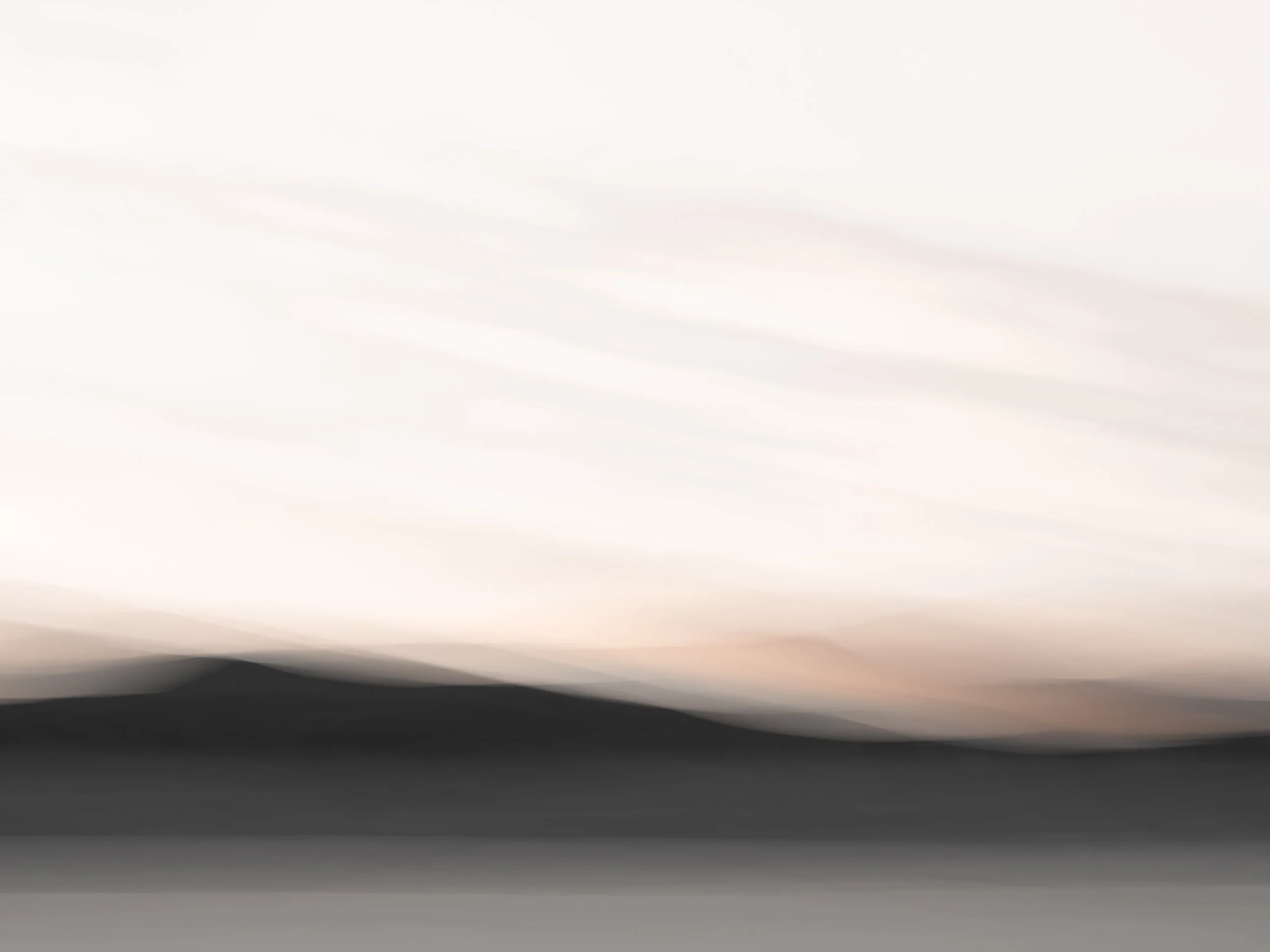
That sense of transition connects all three photographs. Quiet Flame carries the warmth that lingers before the light disappears. Gloaming Hills holds the land in a softer, less certain state. Eclipsed Horizons is more spare and distant, reducing the landscape to layers, tone and suggestion.
Together, they create a gentle progression rather than a dramatic statement. Their horizons appear, soften and recede. The landscape remains recognisable, but it is never pinned down completely.
I chose them not because they were the loudest images in Transient Vistas, but because they left room. Room for memory, for association and for the viewer to bring something of their own to the work. Seen together, they share a subdued palette and an unhurried rhythm that felt complete in itself.
Why an open edition
My limited-edition exhibition work continues to be available through Novado Gallery. The Gloaming has a different purpose.
These are companion works from Transient Vistas that have never been exhibited through the gallery. I wanted to make them available directly from my studio as signed open-edition prints, offering a more accessible way to live with the work while keeping the materials and presentation at a fine-art standard.
Open edition does not mean casual or mass-produced. Each print is made to order, personally inspected and signed by me. It is accompanied by a Certificate of Authenticity and information about the work, paper and care.
For me, the distinction is not about one kind of photograph mattering more than another. It is about giving different bodies of work the form that suits them best. The Gloaming feels intimate and domestic. It belongs in the spaces where people read, rest, gather and return every day.
The physical print
Screens are useful, but they flatten things. Intentional-camera-movement photographs can appear almost weightless online; on paper, they gain surface, depth and presence.
I chose Hahnemühle German Etching for its softly textured, matte finish. The paper holds subtle tonal shifts beautifully and gives the blurred gestures in the photographs a quiet physicality without adding shine. The texture becomes visible as the light changes, but it never competes with the image.
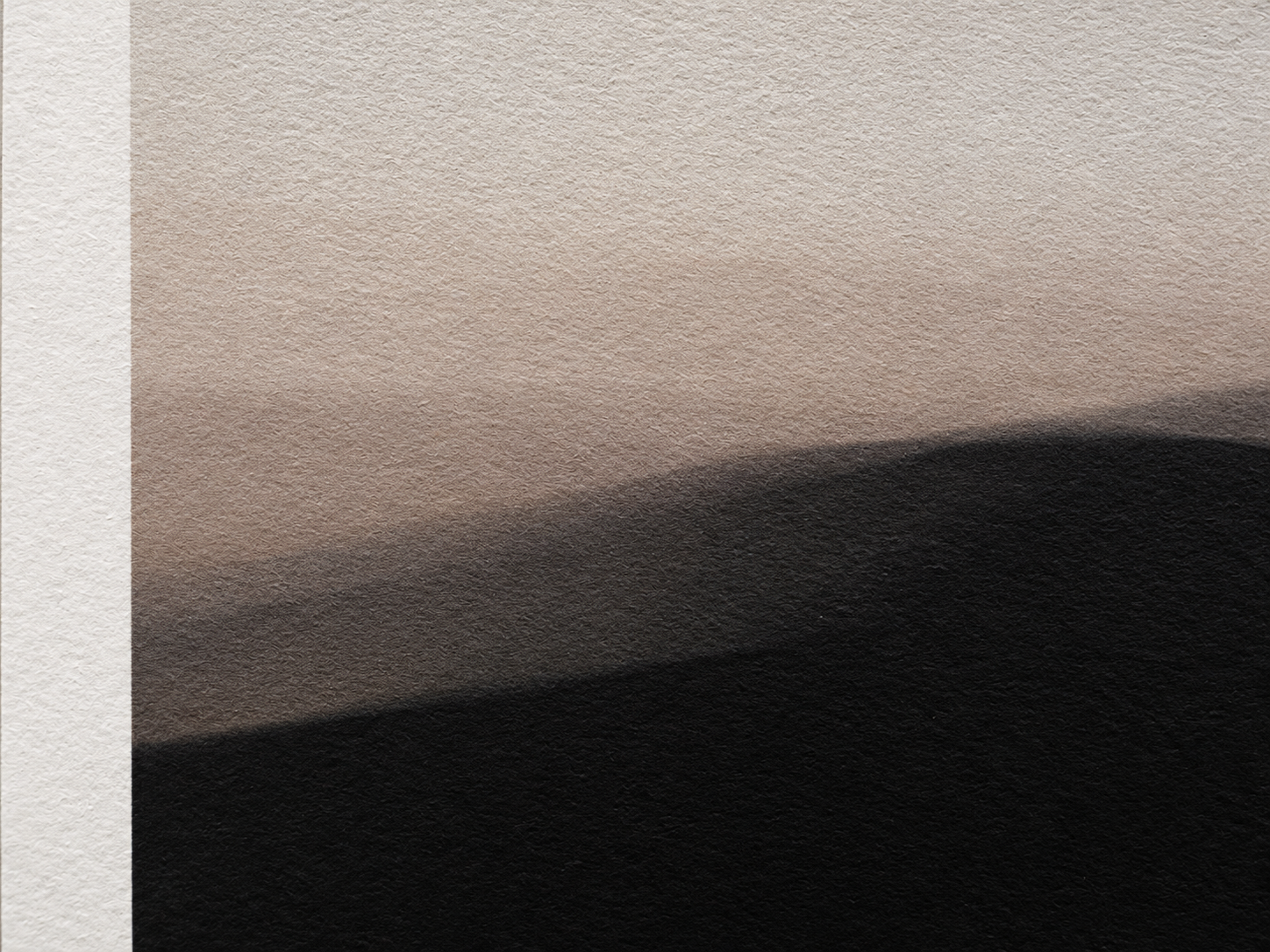
Each archival pigment print is produced on a 20 × 16-inch sheet, with an image area of approximately 19.2 × 15.2 inches and a white border for signing and framing. The prints are sold unframed so that they can be presented in a way that suits the room and the person living with them.
After production, every print comes to me first. I inspect and sign it, prepare its certificate and care card, then package it flat for tracked shipment. That final studio handling matters to me. Buying a work of art should feel personal, even when the journey begins through a screen.
Atmosphere in a room
I often think about what a photograph does after it leaves the studio.
The Gloaming photographs are not intended to dominate a room. They change its pace. Their softened forms and restrained colours offer somewhere for the eye to rest, while their traces of hills, light and horizon reveal themselves gradually.
They can bring warmth to a minimal interior, soften a more architectural space or add a sense of distance to a quiet corner. I can also imagine them in hospitality and wellness settings, where atmosphere matters and art has to continue giving without demanding constant attention.
That is what I hope these three photographs offer: not an escape from the room, but a small opening within it. A reminder of weather, distance and the hour when the familiar world becomes briefly uncertain.
The Gloaming began as a group of photographs that did not quite belong to the original exhibition sequence. In finding their own form, they became something more intimate: three ways of holding onto the last light.
Join Studio Letters for early looks at new work, print releases and exhibition news.