Photographing Scotland as Memory, Not Landscape
Scotland is not short of scenery. My photographs begin with a different question: not simply what did this place look like, but what did it feel like—and what remained after I left?
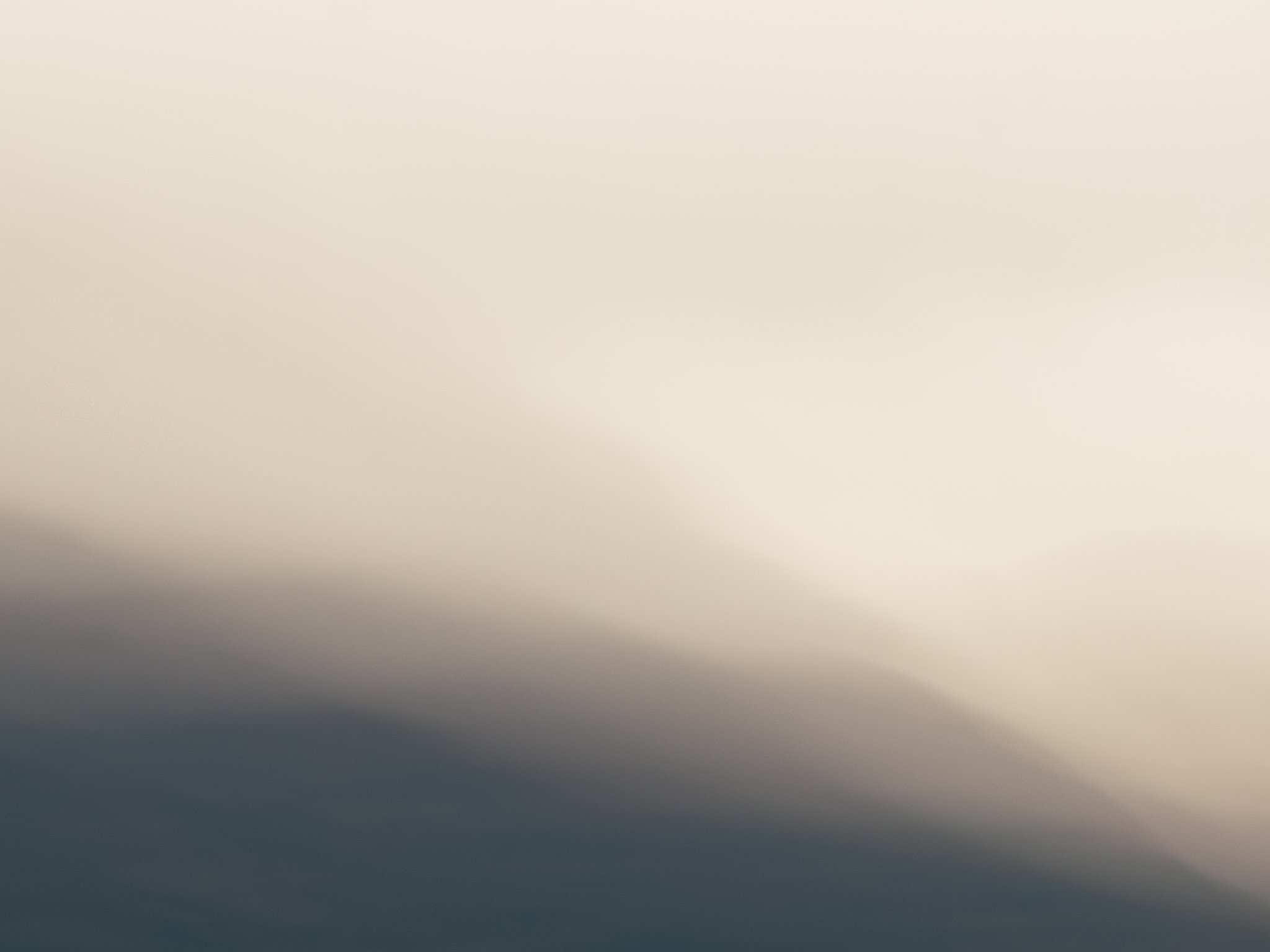
Veil Across the Ridge, from Transference - Torridon & Wester Ross
Scotland is not short of scenery. This is both a gift and a slight nuisance if you photograph it.
Point a camera in almost any direction in the Highlands and you are liable to find a mountain, a loch or a suspiciously well-placed sheep. A beautiful photograph is always possible. The more difficult question is whether it feels like mine.
I was born in Edinburgh and now live in Jersey City, so returning to photograph Scotland is never quite the same as arriving somewhere new. I am not exactly a visitor, but neither am I the person who once knew the place without having to think about it. Scotland is home, history and distance all at once.
That changes the way I see it.
The landscape we carry with us
When I return to Scotland with a camera, I am photographing more than the land in front of me. I am also photographing the Scotland I remember, the one I have missed and the one that has inevitably changed while I was away.
Memory is not especially tidy. It keeps certain things in perfect focus and lets others dissolve. It exaggerates colour, loses chronology and occasionally presents a feeling as though it were a fact. In other words, it is a fairly unreliable archivist - but an interesting collaborator.
That is one reason conventional landscape photography has never felt like quite enough for me. I admire photographs that describe a place with great clarity, but I am less interested in recording exactly how a landscape looked at a particular moment than in preserving what it felt like to stand inside it.
The hush beside a loch before rain. A ridge appearing and disappearing behind cloud. The sudden flare of light that lasts just long enough to make you question whether you actually saw it. These are the things I carry home.
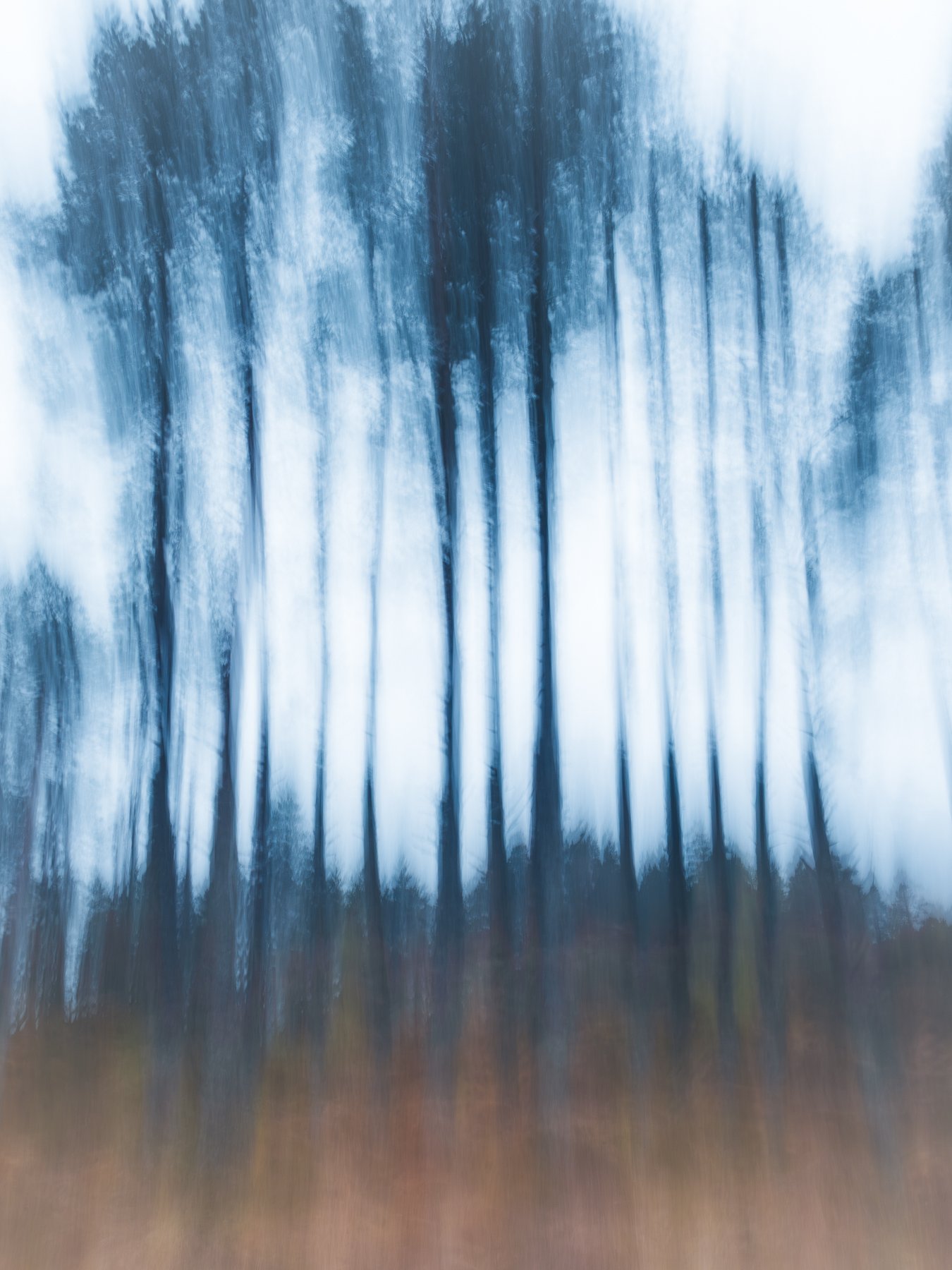
Where the Pines Remember, from Transference - Torridon & Wester Ross
Why the photographs move
I work primarily with intentional camera movement, often shortened to ICM. Rather than holding the camera still, I move it deliberately during the exposure. The direction and pace of that movement, the shutter speed, the available light and the forms within the landscape all affect the result.
It is not a filter added afterwards, and it is not simply a matter of waving the camera about and hoping the Highlands sort it out. If only they were so obliging.
The process is physical and responsive. A vertical movement might draw out the rhythm of trees or the rise of a hillside. A softer horizontal movement can follow the line of water or turn a distant shore into bands of colour. Small changes in timing create entirely different photographs, which is why I may make hundreds of exposures before finding one that holds.
What I am looking for is not technical perfection in the usual sense. It is alignment: the rare frame in which movement, light, colour and emotion settle into the same place.
The softened detail is important. Memory rarely returns to us in crisp, evenly lit files. It comes as fragments, impressions and atmospheres. ICM allows the landscape to remain recognisable while slipping away from literal description. The result sits somewhere between a photograph and a recollection.
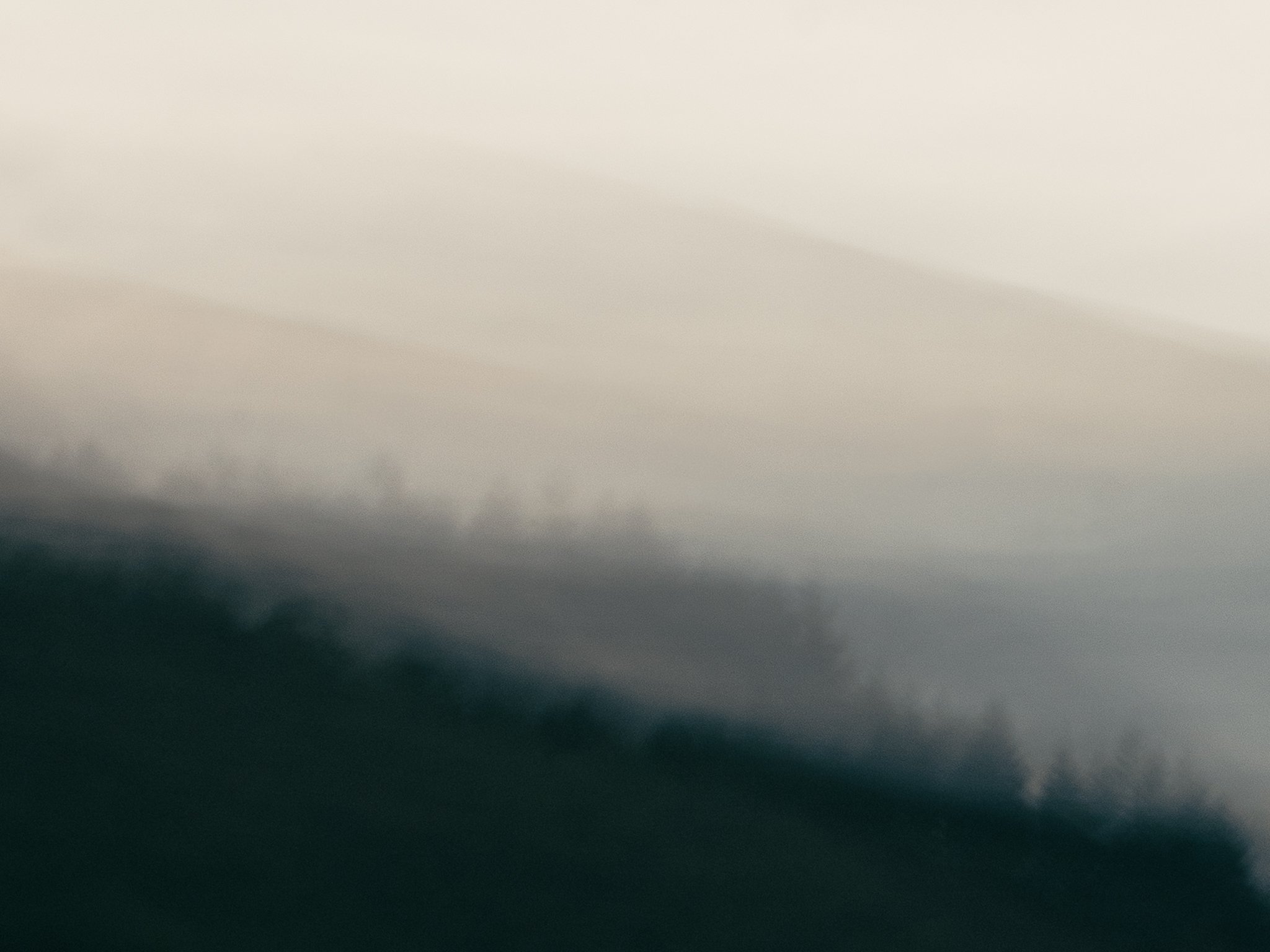
Treeline Hush, from Transference - Torridon & Wester Ross
Beyond the postcard
Scotland may be one of the most photographed countries in the world, and understandably so. It has been doing brooding magnificently for centuries.
But familiarity can flatten a place. Certain views become shorthand: the grand mountain, the ruined castle, the perfectly mirrored loch. There is nothing wrong with those images, but I am drawn to quieter encounters - the edge of a treeline, pale light spreading across water, weather erasing part of a hill.
In Transient Vistas, made in Harris and Lewis, the landscape seemed to change faster than I could name it. Sea, sand, rain and sky continually rearranged themselves. The photographs became less about fixed views than about impermanence.
In Transference, photographed in Torridon and Wester Ross, I found something different: ancient land that still appeared to be in motion. Pines emerged through rain, ridges dissolved into cloud and light travelled across the lochs in brief, shifting passages. The work grew from that tension between permanence and change.
These places have histories, names and physical realities that matter to me. I do not want to turn Scotland into a vague mood. But neither do I want the photograph to behave like evidence. The factual landscape is the beginning; the emotional landscape is what makes me press the shutter.
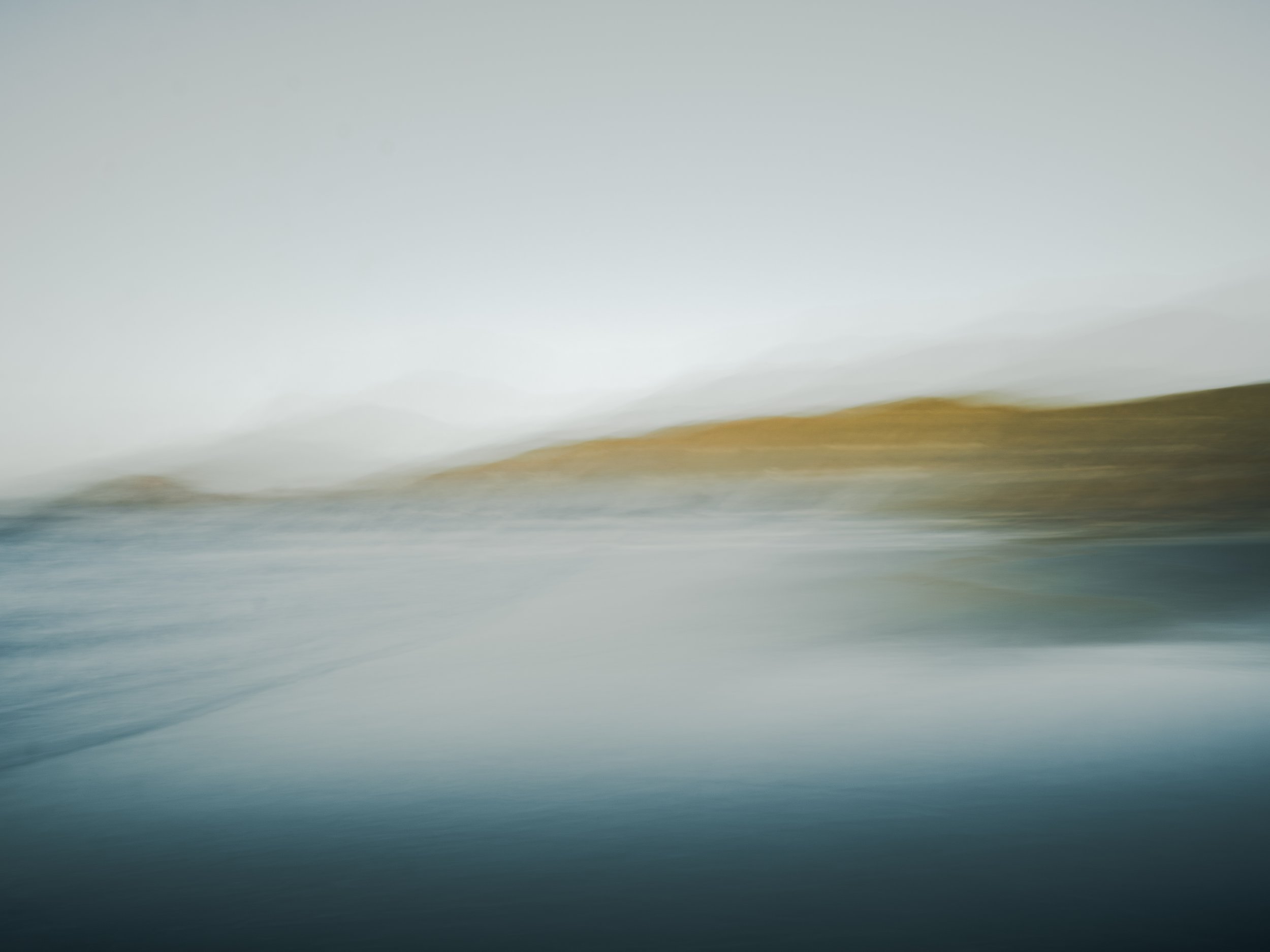
Spectral Shores from Transient Vistas - Harris & Lewis
Leaving room for someone else
Abstraction creates space for the viewer. When a photograph does not explain every tree, stone and cloud, it leaves room for recognition that may have nothing to do with the place where the image was made.
Someone may see a Scottish loch. Someone else may remember the lake near their childhood home, a particular quality of winter light or simply the sensation of being somewhere quiet. Both responses are valid.
That openness matters to me. I want the work to hold my experience without insisting that it is the only one. A photograph can be deeply rooted in Scotland and still allow another person to bring their own memories to it.
Perhaps that is why I think of these works as portraits as much as landscapes. They are portraits of places, certainly, but also of attention: what I noticed, what the weather briefly revealed and what I could not quite leave behind.
Scotland will continue being ridiculously photogenic without any assistance from me. My task is not to prove that it is beautiful. It is to stay with a place long enough for the obvious view to fall away - and to make something from what remains.